

Rumorbooks
HYPE 26
HYPE 26
Couldn't load pickup availability
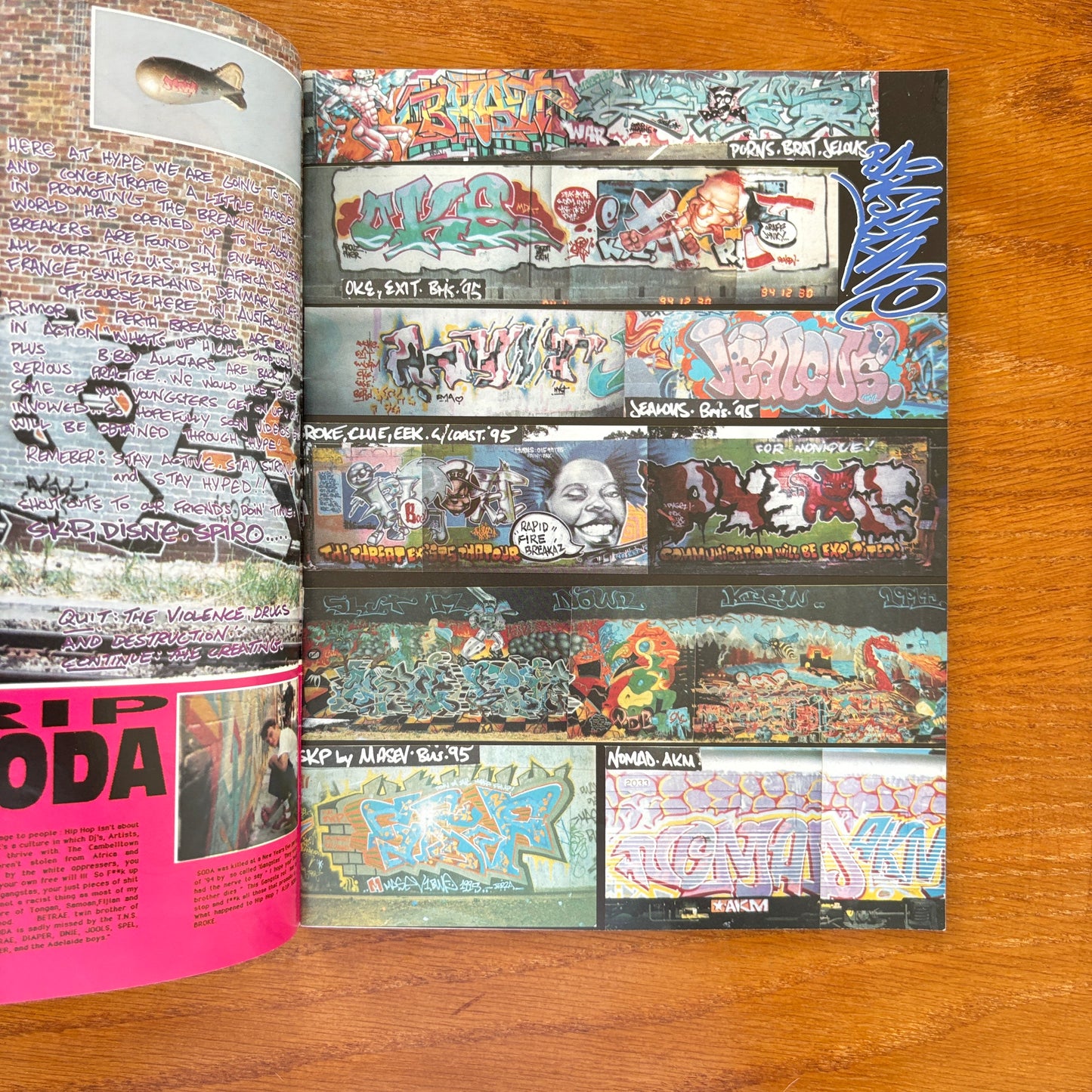
Here’s a fuller version that keeps it grounded in what can actually be established about the magazine, without inventing an issue-specific contents list. HYPE #26 is documented as part of the original Australian run, and contemporary graffiti references describe HYPE as covering Australian and international graffiti, including New York material. (Error322)
HYPE #26
HYPE magazine was one of the most important publications to emerge from Australia’s early graffiti and hip hop culture. Originally launched in 1989, the magazine documented a scene that was still largely underground, covering graffiti alongside the wider elements of hip hop and helping connect Australian writers with a much broader international culture. By the early 1990s, HYPE had become an important record of the rapidly developing Australian graffiti movement, with its pages capturing the styles, crews, walls, trains and personalities that shaped the scene.
Issue #26 comes from this crucial early period of HYPE and is a particularly interesting piece of Australian graffiti publishing. The magazine was not simply focused on local material, with HYPE also bringing international graffiti into its pages and giving Australian readers a window onto developments overseas. Contemporary graffiti publications from the period specifically describe HYPE as carrying substantial coverage of both Australian and New York graffiti.
For anyone interested in the history of Australian graffiti, early hip hop culture or the evolution of street culture in Australia, HYPE remains an important primary source. Its rough, independent approach and photographic documentation preserve a period when graffiti was developing outside the mainstream, before the imagery and language of the culture became widely absorbed into popular culture.
HYPE originally ran from 1989 and produced more than 20 issues during its early period. The magazine would go on to become one of the key archival records of Australian graffiti culture, making surviving original issues increasingly desirable to collectors and anyone interested in the history of Australian street culture.